
Assessing the Role of Recreational Forest Users in the Spread of Pathogens in Scotland
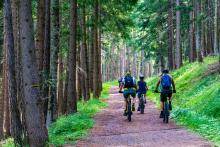
Pathogens of trees, such as Phytophthora species, represent a major and growing threat to Scotland’s forest, woodland and semi-natural ecosystems. While primary introduction pathways such as plant trade are relatively well characterised, there remains a significant evidence gap around secondary, human-mediated pathways of pathogen spread, particularly those associated with recreational forest use.
Forest recreation in Scotland has increased substantially in recent years, with high and growing use by walkers, runners, dog walkers and mountain bikers. Recreational activities can involve repeated movement between sites, use of informal trail networks, and soil disturbance, all of which may increase the risk of pathogen transfer. In particular, mountain bikers may represent a higher-risk group due to tyre-mediated soil transfer, longer distances travelled, and trail construction or use in sensitive areas. However, the relative risk posed by different recreational user groups, and what interventions may reduce high-risk behaviours, has not yet been established.
This project will assess how recreational forest users, particularly mountain bikers, walkers, runners and dog walkers, may contribute to the spread of tree pathogens such as Phytophthora in Scotland. Through behavioural research and evidence gathering, it will identify higher-risk activities and pathways for pathogen transfer, explore awareness and barriers to good biosecurity practice, and develop targeted, practical recommendations and interventions to reduce risks. The project will provide an important evidence base for risk-based biosecurity guidance, helping to protect Scotland’s forests, woodlands and semi-natural ecosystems while supporting enjoyable and sustainable recreational access.
Image credit: by MaBraS from Pixabay