
Developing an assessment framework to identify plant health benefits and risks for emerging novel crops in Scotland
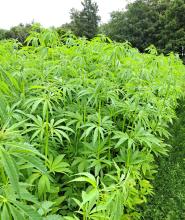
Scottish agriculture is dominated by a small number of arable crops, which presents a vulnerability in the face of climate change, soil degradation, and rising pest and disease pressures. There is growing interest from farmers and policymakers in the cultivation of emerging or novel crops - such as hemp, beet, flax, rye, cover crops and legumes - to diversify rotations, improve soil health, support net-zero and biodiversity targets, and access new markets. However, a systematic way was missing to assess the plant health risks and benefits of these crops before widespread adoption. Lessons from oilseed rape, which transitioned from a low-input break crop to one burdened by escalating pest and disease pressures, highlight the consequences of introducing crops without pre-emptive assessment.
This project developed and validated an evidence-based, multidisciplinary framework to evaluate plant health risks and downstream benefits of emerging crops in Scotland, applicable across agriculture, horticulture, forestry and the natural environment. The four-part framework assesses plant health risk, pest spread potential, pest management feasibility, and downstream environmental and agronomic benefits. Validation using oilseed rape demonstrated strong predictive capability, while application to sugar beet, industrial hemp and mustard highlighted crop-specific risks, benefits and knowledge gaps. Stakeholder engagement confirmed the framework’s flexibility and value as a decision-support tool, with recommendations for future expansion and policy integration to de-risk sustainable crop diversification.