
European Mountain Ash ringspot associated virus – a rapid review of the wider threat to Scotland
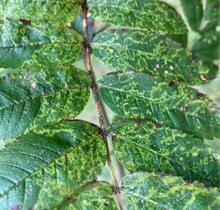
European mountain ash ringspot-associated virus (EMARaV) is an emaravirus infecting rosaceous hosts that is established and likely widespread in Scotland and elsewhere in Great Britain. Evidence suggests it has been present in the UK for several decades. The virus primarily affects species within the Sorbus complex and related genera (e.g. Amelanchier, Aronia). EMARaV is putatively vectored by the eriophyid mite Phytoptus pyri (pear leaf blister mite), enabling local spread and potential longer-distance dispersal through wind-borne movement of the vector.
EMARaV was detected in an Aronia tree in the wider environment in Scotland; however, there are no reports of the virus spreading to other commercially important rosaceous genera, such as Rubus, or to smaller-scale commercial plantings of Aronia melanocarpa (chokeberry) in Scotland, England or Wales. Furthermore, evidence from large-scale chokeberry orchards elsewhere in Europe indicates that EMARaV is, at most, a minor pathogen of this crop.
Based on current evidence, EMARaV does not represent a significant emerging, or escalating threat to Scotland’s forestry, woodland biodiversity, or horticultural sectors. Observed impacts are largely limited to foliar symptoms in susceptible hosts. Continued surveillance, reporting of suspect cases, and laboratory confirmation will support ongoing risk monitoring.
Photo credit: Fera Science