
RotStop: Preserving the beauty and business of Scottish bulbs
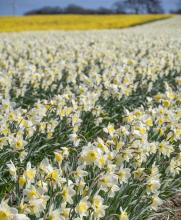
Basal rot, caused by Fusarium oxysporum f. sp. narcissi (FON), is one of the most serious diseases affecting Scottish daffodil production. It reduces bulb quality, limits yield, and causes financial losses for growers. Hot water treatment (HWT) is currently used to manage pests such as nematodes, but it does not consistently control basal rot and, in some cases, may even worsen disease spread under warm, moist conditions. This project reviewed alternative options that could improve disease management, particularly treatments compatible with existing bulb workflows.
Using a structured, evidence-based review, we assessed biological and disinfecting treatments that have shown activity against Fusarium in bulb crops. Each option was ranked based on efficacy, compatibility with HWT, regulatory feasibility, operator safety, disposal requirements, and practical fit for growers.
The strongest candidates were microbial biocontrol agents and certain oxidising sanitising agents. These options offer realistic regulatory pathways and could integrate into centralised HWT systems used by Grampian Growers.
Stakeholder discussions confirmed that effective, HWT-compatible treatments would be most practical. The next step is targeted validation to identify the most promising candidates for future bulb testing and potential adoption within the Scottish daffodil sector.
Photo credit: Grampian Growers Ltd.