
Understanding the drivers of emergence of Curreya pithyophila and associated impacts on Caledonian pine
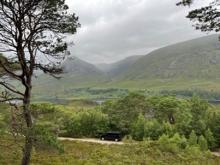
This study investigated the drivers underpinning the recent emergence of Curreya pithyophila on Scots pine (Pinus sylvestris) in Scotland and assessed its impacts on native Caledonian pine populations. Using a combination of whole-genome sequencing, population genomics, morphological comparisons and field surveys, the project examined the evolutionary relationships, origin and epidemiology of two co-occurring forms of C. pithyophila (phragmospore and dictyospore).
Genomic analyses confirmed that the two forms are genetically distinct species. Patterns of genetic diversity suggest that the dictyospore form might have been present in Britain for longer, whereas the phragmospore form may represent a more recent introduction. Both forms depend on an association with a native insect (the Scots pine adelgid) and cannot grow in healthy pine tissue on their own.
Field surveys across eastern and western Caledonian pinewoods revealed higher incidence on wetter sites and that disease has likely been present in native pinewoods since the mid-1990s. While the fungus does not usually kill trees, repeated infections can lead to accelerated death of lower branches, disfiguring blackened cankers due to secondary infections of adelgid feeding sites by the wound pathogen Crumenulopsis sororia, and reduced tree vitality. Encouragingly, the study also found evidence that some Scots pine families may be genetically more resistant, suggesting that populations that are allowed to freely regenerate have the capacity to adapt over time.
The findings highlight the importance of planting healthy stock, choosing suitable sites, and monitoring pinewoods carefully as climate conditions continue to change.
Image courtesy of Sarah Green, Forest Research©