
Understanding the risk to Scotland’s plant health arising from wireworm (click beetles) and the monitoring and Integrated Pest Management requirements
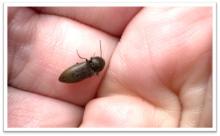
Wireworm are an established and potentially increasing pest threat to Scottish agriculture, affecting potatoes, cereals and other high-value crops. This project delivered an assessment of wireworm distribution in Scotland, including species composition and grower awareness. Through field surveys, trapping programmes, damage assessments and industry engagement, the project established an up-to-date evidence base on the wireworm species present in Scotland and the factors associated with increased risk. Results showed that 75% of surveyed sites contained wireworm or related click beetle species, with Agriotes obscurus identified as the dominant species. The project also provided the first independently verified records of Agriotes lineatus in Scotland and highlighted the presence of the lesser-known click beetle Hypnoidus riparius, which may warrant further investigation as a potential crop pest.
The project evaluated practical monitoring approaches and found click beetle pheromone trapping to be an effective method for detecting and tracking wireworm populations, while identifying limitations in traditional bait trapping methods under Scottish conditions. Surveys and crop assessments highlighted that wireworm damage is often under-recognised or misdiagnosed, particularly where symptoms resemble other issues such as slug damage or Rhizoctonia. The work identified key risk factors including long-term grassland history, grassy field margins and certain rotational practices, and produced updated guidance on monitoring and integrated pest management (IPM). By improving understanding of wireworm distribution, risk factors and practical monitoring techniques, the project provides Scottish growers and agronomists with evidence-based tools to support earlier detection, better-informed management decisions and more sustainable long-term control of wireworm populations.