
Whole of Scotland LiDAR: Analysing the opportunities for plant health benefits and potential barriers to exploitation
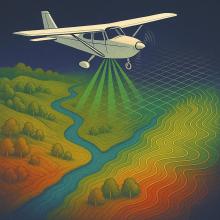
Scotland’s new national LiDAR programme will provide an important source of structural information which could be exploited in plant health surveillance, offering consistent, repeatable three-dimensional measurements of vegetation and terrain across the country. This project evaluated the extent to which the national LiDAR dataset can support plant health monitoring and how it can be integrated into Scotland’s wider surveillance system. The assessment found that LiDAR is most valuable for detecting and quantifying structural changes in vegetation, such as canopy decline, mortality, regeneration failure, scrub encroachment, storm damage, fire impacts, and long-term ecosystem change, particularly in woodlands, hedgerows, and other structurally persistent habitats. However, national LiDAR is not well suited to detecting early physiological stress or disease symptoms before visible structural changes occur.
The project identified potential plant health applications and explored opportunities to integrate LiDAR with existing monitoring approaches, including satellite Earth observation, aerial imagery, forest inventory data, citizen-science reporting, regulatory surveillance, and UAV surveys. Findings indicate that LiDAR delivers the greatest benefit when used as part of a multi-sensor monitoring framework, providing a national structural baseline against which changes in vegetation condition can be assessed over time. The project also highlighted key implementation requirements, including improved coordination, validation data, analytical workflows, and long-term governance arrangements. Overall, the work provides evidence-based recommendations for positioning LiDAR as a core structural monitoring layer within Scotland’s plant health surveillance system, helping to improve risk assessment, prioritisation, and long-term resilience monitoring in the face of increasing biosecurity and climate-related pressures.